Demographic Patterns Shaping Reward Access in Digital Bingo Environments
Finley Schwarz · Sep 17, 2026
Demographic Patterns Shaping Reward Access in Digital Bingo Environments
Digital bingo platforms have expanded rapidly in recent years, yet reward structures such as welcome bonuses, loyalty points, and cashback offers do not distribute evenly across user bases, with demographic factors playing a central role in determining who qualifies and how much they receive.
Age-Related Patterns in Reward Distribution
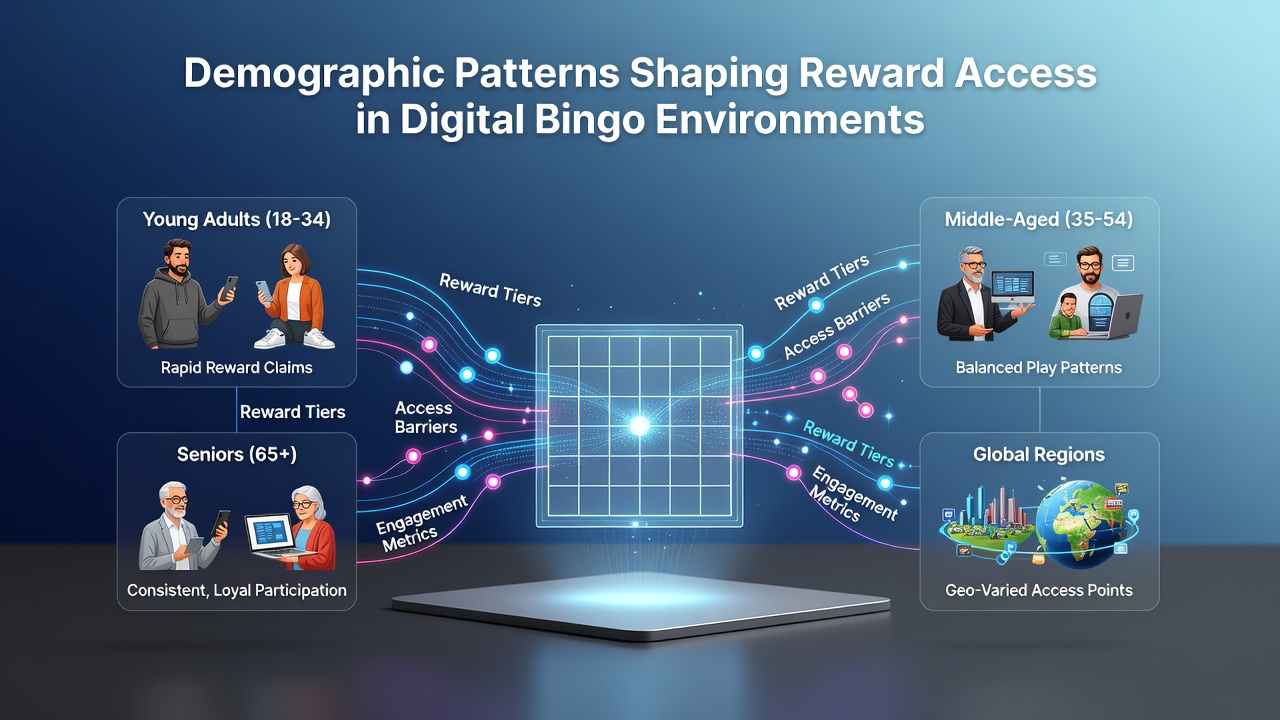
Players aged 25 to 44 frequently encounter more aggressive reward offers because operators target this cohort for higher engagement levels, while those over 55 often see fewer promotional tiers even though they represent a stable segment of regular participants, according to industry analytics reports that track login frequency and deposit patterns across multiple platforms.
Younger users in the 18-24 range receive initial sign-up incentives at higher rates, yet their progression to advanced loyalty programs stalls more often due to lower average deposit volumes, which in turn limits access to tiered rewards that require sustained activity over several months.
Gender Dynamics and Access to Bonuses
Women constitute a majority of active digital bingo users in many markets, and data from platform operators shows they claim loyalty rewards at slightly higher conversion rates than men, partly because female players tend to maintain longer session durations that trigger automatic bonus unlocks tied to playtime milestones.
Male participants, by contrast, cluster more heavily around high-stakes rooms where reward multipliers activate only after larger cumulative wagers, creating a different pathway to the same prize pools but with stricter volume thresholds that affect overall access equity.
Geographic Influences on Digital Bingo Rewards
Users located in urban centers with strong broadband infrastructure gain earlier access to time-limited promotions because platform algorithms prioritize low-latency connections when distributing flash bonuses, whereas rural participants in regions with variable connectivity encounter more frequent eligibility exclusions tied to technical verification steps.
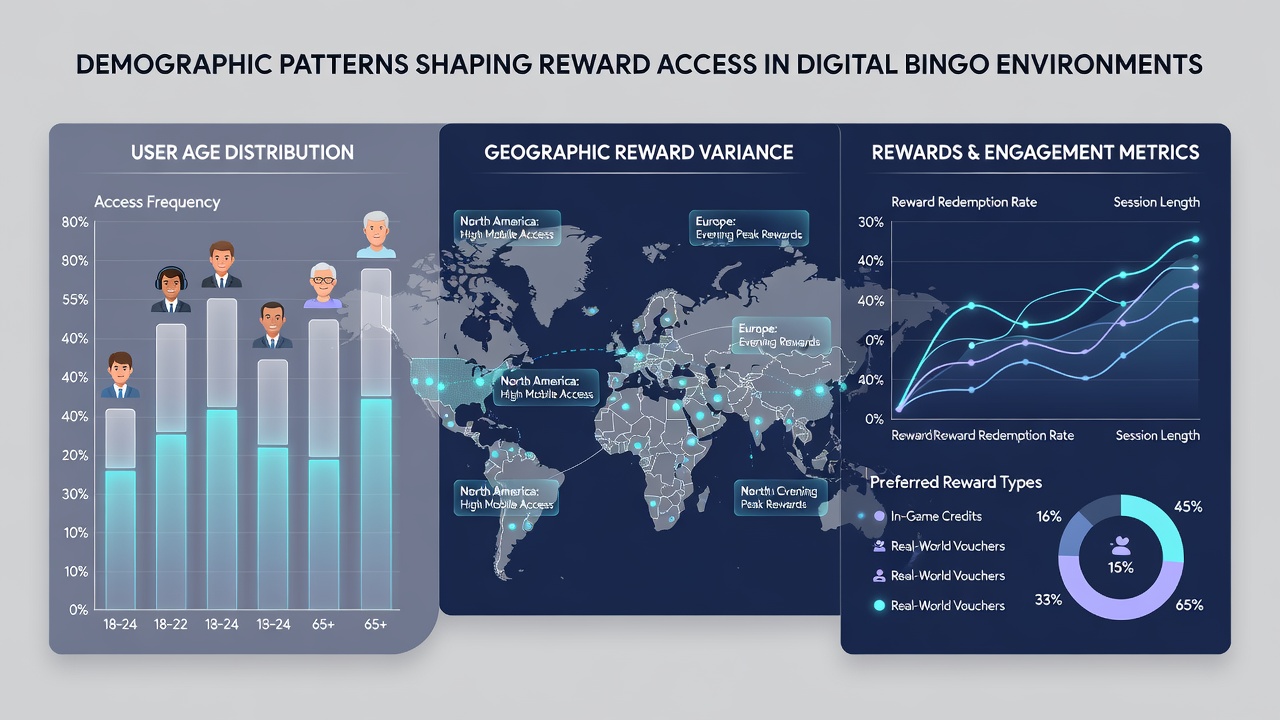
European markets regulated under national frameworks demonstrate clearer segmentation in reward access compared with North American jurisdictions, where state-by-state rules create patchwork eligibility that favors residents of provinces with more permissive licensing structures; researchers at the Canadian Centre on Substance Use and Addiction have documented these regional disparities in a 2025 analysis of online gaming participation.
Socioeconomic Factors adn Participation Rates
Higher household income correlates with greater uptake of premium reward tiers that require minimum monthly deposits, while lower-income groups rely more on free-play entry points that rarely convert into cashable bonuses because the underlying reward mechanics favor volume-based progression over one-time participation.
Educational attainment also surfaces in usage data, with college-educated users more likely to navigate complex terms and conditions that gate certain rewards, resulting in higher claim rates for those groups even when base participation numbers remain comparable across education levels.
Emerging Trends Projected for 2026
Platform operators anticipate further refinement of demographic targeting algorithms ahead of September 2026, when several jurisdictions plan to introduce updated responsible gaming reporting requirements that will mandate disclosure of reward distribution by age and income brackets. These changes could alter current patterns by forcing operators to balance promotional spend more evenly across segments rather than concentrating offers among high-value demographics.
Observers tracking these developments note that cross-border player migration may increase if reward access tightens in one region while remaining flexible in another, particularly as new verification tools tied to location and spending history become standard.
Conclusion
Demographic variables continue to determine which players receive the most substantial rewards in digital bingo environments, with age, gender, geography, and socioeconomic status shaping eligibility through platform design choices and regulatory frameworks alike. Continued monitoring of these patterns will remain essential as operators adjust systems to meet evolving compliance standards and user expectations through 2026 and beyond.